Antibody Discovery & Development — Programs, Platforms & Expertise

Design-driven services, tailored to target insights and lead antibody requirements
AVS Bio offers end-to-end custom antibody discovery and development programs for biopharmaceutical companies and research institutions worldwide. Since 2018, we have helped more than 100 life sciences companies build successful lead antibody programs — including 10 antibodies that have entered clinical trials — across more than 300 projects ranging from targeted tool generation to comprehensive discovery and development. Every program starts with a detailed analysis of the target and its intended mode of action. AVS Bio's team works closely with clients to define the precise requirements of each lead antibody before selecting the technologies and approach. Programs draw on in vivo, in vitro, and in silico methods, configured to the target biology and downstream application.
The typical program covers:
- Tool Generation — custom antigens, recombinant proteins, or cell line development
- Immunization — species selection, antigen format, adjuvant strategy optimized for the target
- Antibody Discovery — B cell selection, DeepDisplay phage display, or hybridoma with high-throughput functional screening
- Characterization — binding, functional, and biophysical assessment to rank and select candidates
- Developability Profiling — early risk assessment benchmarked against 100+ clinical antibodies
- Optimization & Engineering — affinity maturation, humanization, liability de-risking
- Antibody Production — from stable cell line through to scale-up
Track record:
Frequently Asked Questions
Q: How long does custom antibody development take?
A: Custom antibody development with AVS Bio typically takes 3–6 months from target validation through lead candidate selection. The timeline includes target analysis, immunization strategy, antigen production, high throughput screenings, and optimization. Complex programs with multiple targets, longer immunization trajectories or engineering requirements may extend beyond 6 months.
Q: What is the difference between polyclonal and monoclonal antibodies?
A: Polyclonal antibodies are a mixture produced by different B cell clones, each recognizing a different epitope on an antigen. They offer broad coverage but their consistency varies between batches. Monoclonal antibodies come from a single B cell clone and recognize one specific epitope, offering high specificity and batch-to-batch consistency. Monoclonals are preferred for therapeutic development and precision diagnostics; polyclonals are often used in research assays and as research tools.
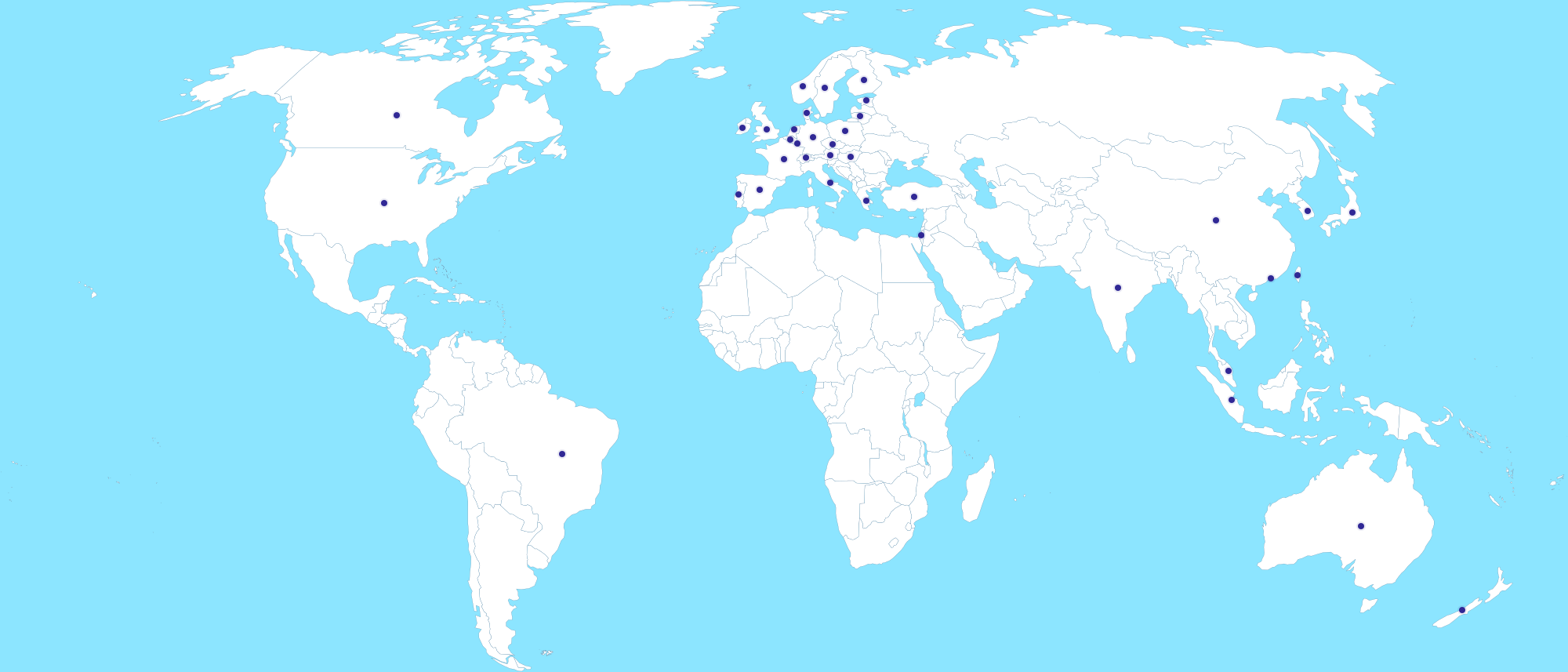
Location of our Antibody Discovery and Development clients
.avif)