Antibody Developability Profiling — De-Risk Candidates Early

Finding Liabilities Early
AVS Bio's workflow focuses on identifying potential liabilities at an early stage. Our developability assessment helps identify less well-behaving antibodies, generating data that guides triaging and optimization strategies. To allow lead candidate benchmarking, we compare developability data to data obtained with a library of 100+ clinical antibodies, which we have analyzed in our in silico workflows and experimentally screened in our in vitro developability assays following recombinant production in CHO cells. This process makes it easier to determine clinical suitability based on relative ranking.
Developability profiling is most valuable when applied early — before costly optimization campaigns — to identify and de-risk candidates based on biophysical and physicochemical properties that predict clinical success. Profiling at the lead selection stage reduces the risk of attrition in later development and informs prioritization decisions before resources are committed to optimization.
Resource:
In silico analysis
Developability
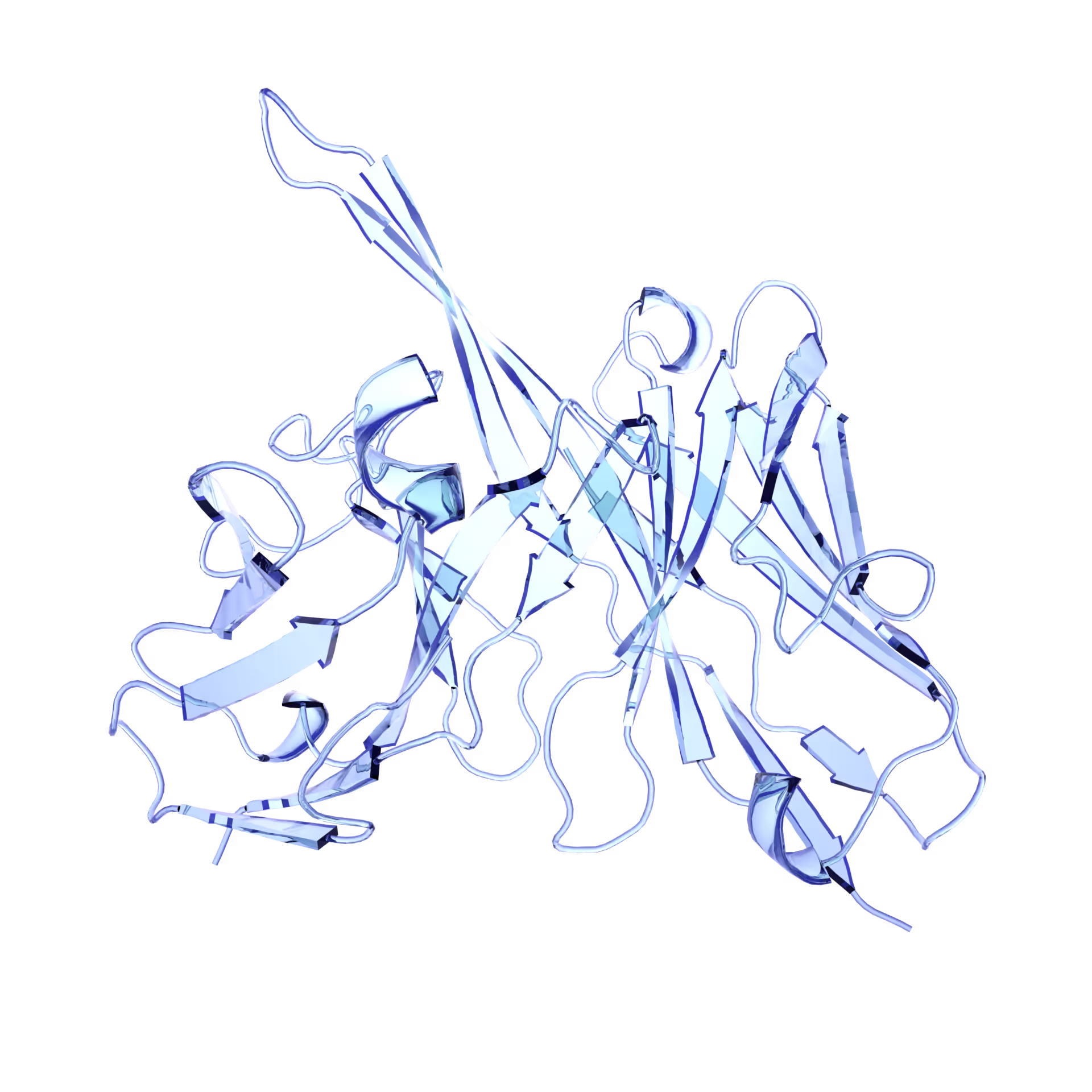
AVS Bio's in silico developability profiling toolset includes sequence analysis, Fv model-based structure analysis, and Fv model-based surface analysis for lead antibody candidates to identify potential unfavorable properties, including (solvent-exposed) chemical liability motifs, aggregation prone regions, and charge properties. These in silico analyses, combined with benchmarking against our reference set of clinical antibodies, facilitate focused antibody de-risking (if required) to improve the antibody developability profile.
Humanness
AVS Bio's platform evaluates antibody sequences for human similarity, providing a "humanness score" that reflects potential risk of immunogenicity. For sequences with a relatively low humanness score, we offer tailored engineering solutions to potentially enhance clinical suitability.
In vitro analysis
In vitro developability tools allow developers to study critical quality attributes such as production yield, polyreactivity, colloidal stability, melting temperature, self- and/or cross-interaction, solubility, and fragmentation. All lead candidate results are benchmarked against the reference set of clinical antibodies.
HPLC-based
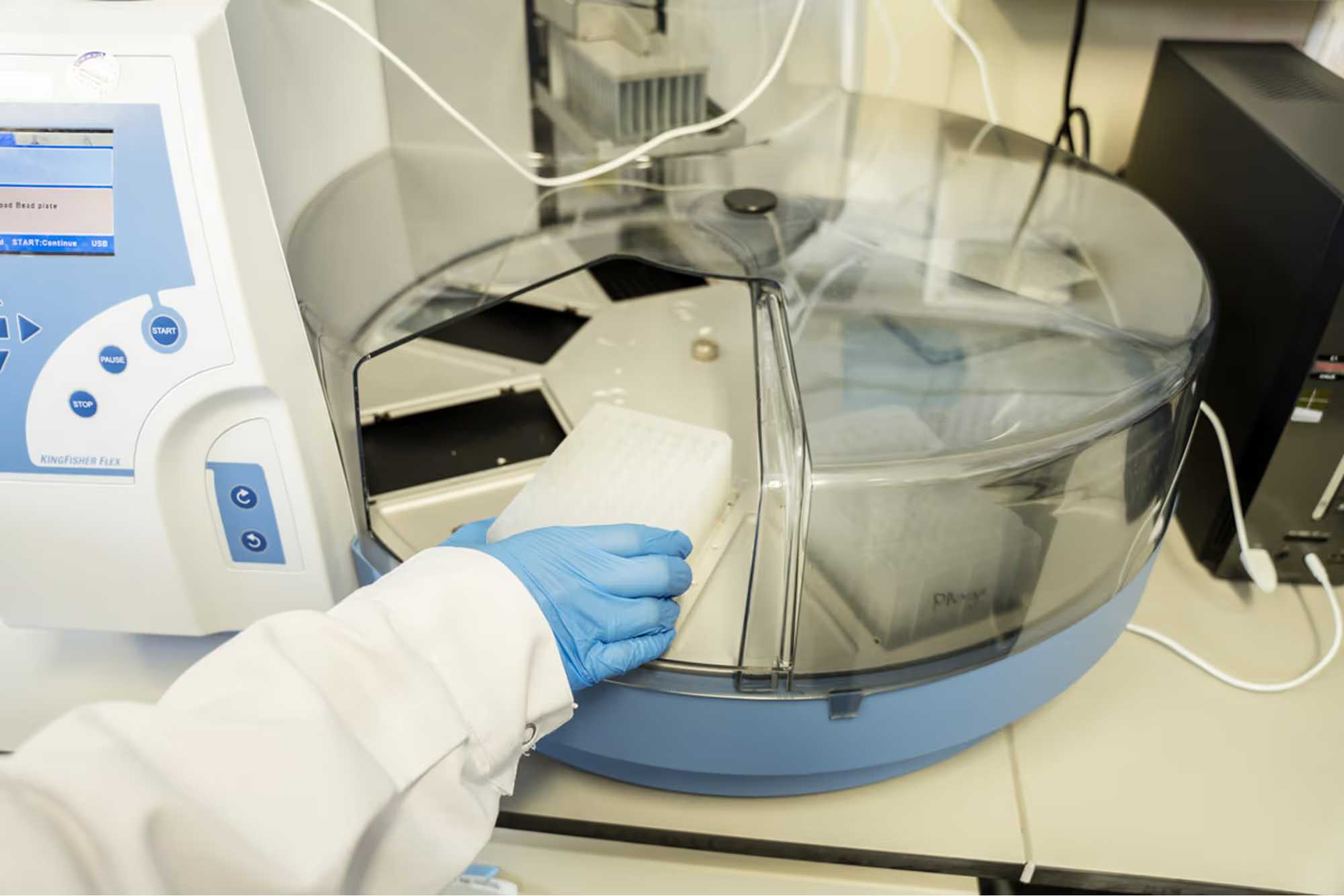
AVS Bio uses state-of-the-art bio-inert high-performance liquid chromatography (HPLC) to perform analytical determination of biochemical and biophysical properties of antibodies. Analysis includes aggregation levels (SEC-HPLC), colloidal stability (SMAC-HPLC), cross interaction (CIC-HPLC), Asparagine (Asn) deamidation and isomerization (CIEX-HPLC), and Met/Trp oxidation (HIC-HPLC).
Plate-based
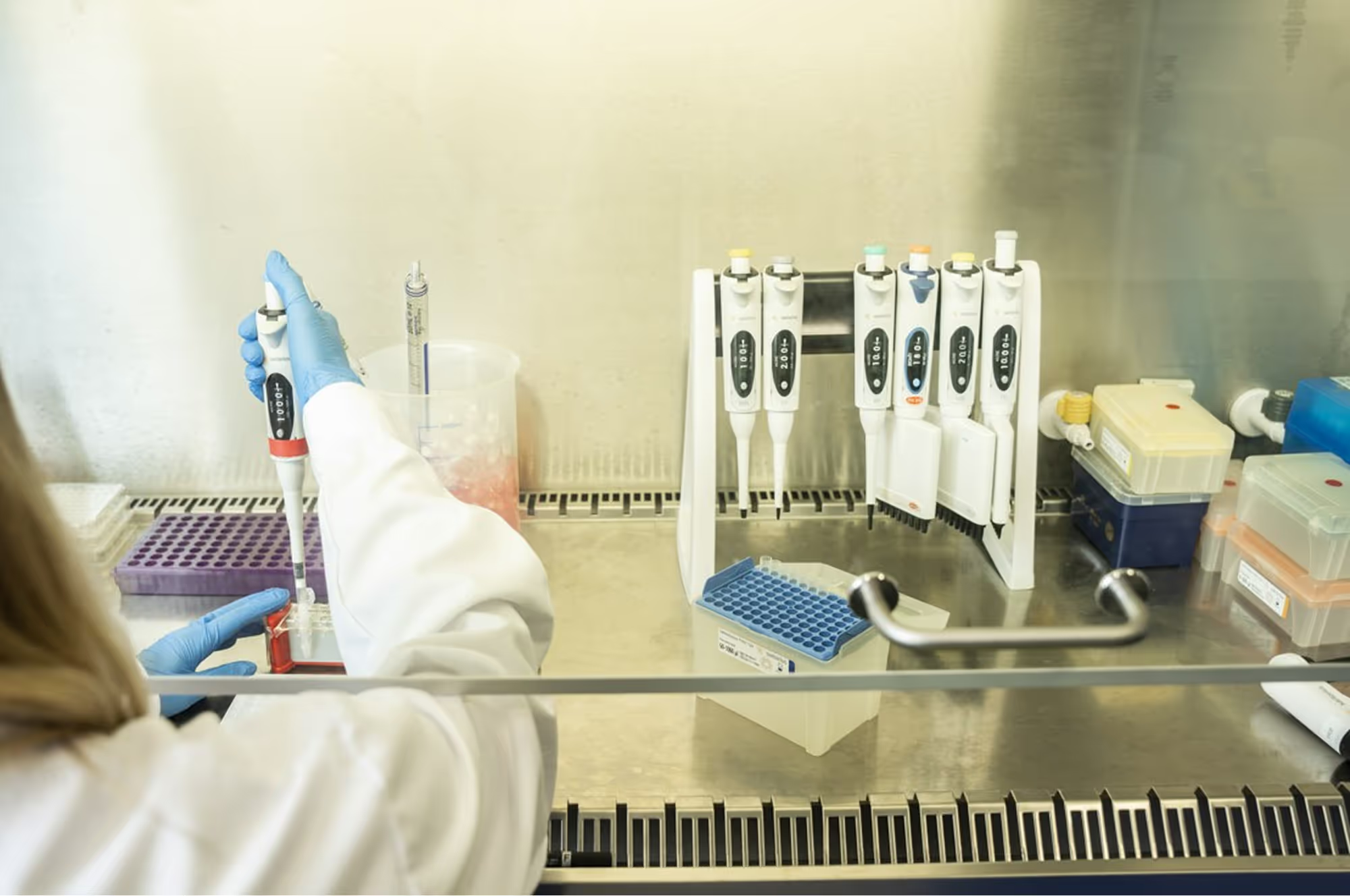
To complement its HPLC-based developability assay methods, AVS Bio offers plate-based assays to assess key biochemical and biophysical properties of antibodies. Polyreactivity against common biomolecules, including dsDNA, lipoproteins, LPS, and cardiolipin can be determined by ELISA. Alternatively, AVS Bio offers a label-free, high-throughput SPR-based method to screen for polyreactivity and self-interaction studies (SINS assays) by use of anti-IgG coated gold particles. In addition, developers can perform antibody melting temperature analysis using a plate-based thermal assay, providing valuable insights into stability.
Candidates that require further improvement based on profiling results are advanced into our antibody optimization and engineering workflow, where targeted humanization, affinity maturation, and liability de-risking are applied to bring lead candidates to clinical suitability.
Frequently Asked Questions
Q: What is developability profiling for antibodies?
A: Developability profiling predicts whether an antibody lead candidate has the physicochemical and biophysical properties needed to advance through development — including expression yield, stability, aggregation propensity, and immunogenicity risk. AVS Bio benchmarks candidates against a database of 100+ clinical-stage antibodies to contextualize results. Early profiling reduces the risk of possible costly failures in later development stages.




.avif)