In silico de-risking engineering for whole antibody panels
Profile your whole antibody panel before you commit lab time. AbRefine builds a multiparametric developability profile for every candidate, benchmarks it against more than 100 clinical antibodies, then humanizes and optimizes multiple leads in parallel, reducing lead generation timelines by up to 50%.
Why assess antibody developability in silico first?
Most antibody programs pick a lead on binding data, then discover aggregation, poor stability or charge issues months later in the lab. By then the alternatives in the panel have often been discarded.
AbRefine moves that risk assessment to the start. Large sequence panels are evaluated computationally, so your team progresses the candidates most likely to survive development and spends wet-lab effort only where it counts.
What AbRefine assesses
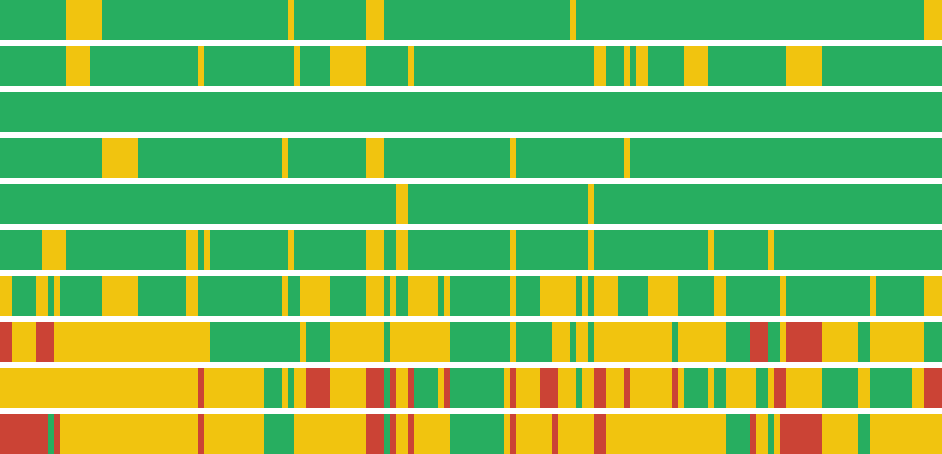
Antibody sequence, structural modeling and surface property assessment combine into one multiparametric developability profile, run on every sequence in your panel.
Aggregation-prone regions
Hydrophobic surface patches that drive aggregation and poor manufacturability are mapped on the modeled structure.
Chemical modification hotspots
Sequence liabilities such as deamidation and oxidation sites are flagged, with their position and exposure.
Charge characteristics
Positive and negative surface patches and Fv charge are assessed for risks to viscosity, clearance and specificity.
Clinical benchmarking
Every candidate is compared with more than 100 clinical antibodies, so you see where your molecules sit against those that reached the clinic.
Humanness and immunogenicity
Humanness and immunogenicity scores estimate the potential immunogenicity risk of each sequence.
You receive
A ranked candidate list with a multiparametric developability profile per sequence, ready for your next go or no-go decision.
In silico de-risking engineering
Beyond assessment, AbRefine engineers better variants for multiple candidates at once, each with sets of variants. Humanization runs together with developability profiling, so human sequence content goes up while developability risks go down, in one high-throughput step.

Antibody humanization
Humanized VH and VL variants for multiple leads in parallel, each scored on humanness and developability, with a modeling report.

Affinity maturation
Structure-based modeling and antibody-antigen docking guide which mutations to test.

Liability de-risking
Flagged hotspots and patches are engineered out while binding is preserved.

Full profile for triage
A complete developability profile is generated for every variant, to triage which clones go to the wet lab.
How an AbRefine project works
Share your sequences
VH and VL, VHH or scFv sequences from any discovery source, under a confidentiality agreement.
Computational triage
Developability profiles, clinical benchmarking and ranking of the full panel.
Engineer variants
Humanization, optimization and de-risking of the candidates worth keeping.
Validate in the lab
Optional expression, high-throughput SPR on the Carterra LSA XT and a wet-lab developability panel.
Optimizing a lead antibody for a KRAS-driven oncology program
aSKY Therapeutics, a Baltimore-based therapeutics company, develops antibodies against unique surface antigens on complex tumors associated with mutant KRAS-driven dysregulation. After working with AVS Bio on antibody discovery, aSKY partnered with us in 2026 to optimize its lead antibody for clinical application using AbRefine.
Antigens that only appear on tumor cells under KRAS-driven dysregulation are hard to present in static systems such as yeast display, which slows classic affinity maturation. AbRefine lets the joint team assess affinity-related design choices, humanness and developability in parallel, and focus lab work on the most promising candidates.
“…incredibly impressed with AVS Bio’s committed, transparent, and collaborative way of working with aSKY.”

Part of an integrated antibody discovery workflow
AbRefine works on sequences from any source, and it is built into AVS Bio’s own discovery platforms: single B cell, phage display, hybridoma and rare hit magnification. Every hit can be ranked from the earliest stage, alongside binding and affinity data.
Frequently asked questions
What is in silico antibody engineering?
It uses sequence analysis and structural modeling to assess and improve antibodies before material is made: predicting developability risks such as aggregation, poor stability and unfavorable charge, and designing humanized or optimized variants for lab testing.
How does in silico antibody humanization work?
The non-human framework is replaced with human sequence while the residues that support binding are retained. AbRefine scores each humanized variant for humanness and developability at the same time.
What do I need to send?
Amino acid sequences of your antibodies (VH and VL, VHH or scFv). Antigen information helps for docking and affinity work. We sign a confidentiality agreement before any sequence is shared.
How long does it take?
It can be as fast as 4 weeks after selecting candidates for recombinant expression. Timelines depend on panel size and wet-lab validation; we confirm them in your proposal.
Which antibody formats can AbRefine handle?
AbRefine models the Fv region rather than the whole molecule, so it covers conventional antibodies as well as single-domain VHH and scFv formats.
Additional antibody discovery and development services


Find out which of your candidates will make it
Tell us about your panel and we will come back with a scope and timeline.